The organizational brain: building company memory with AI
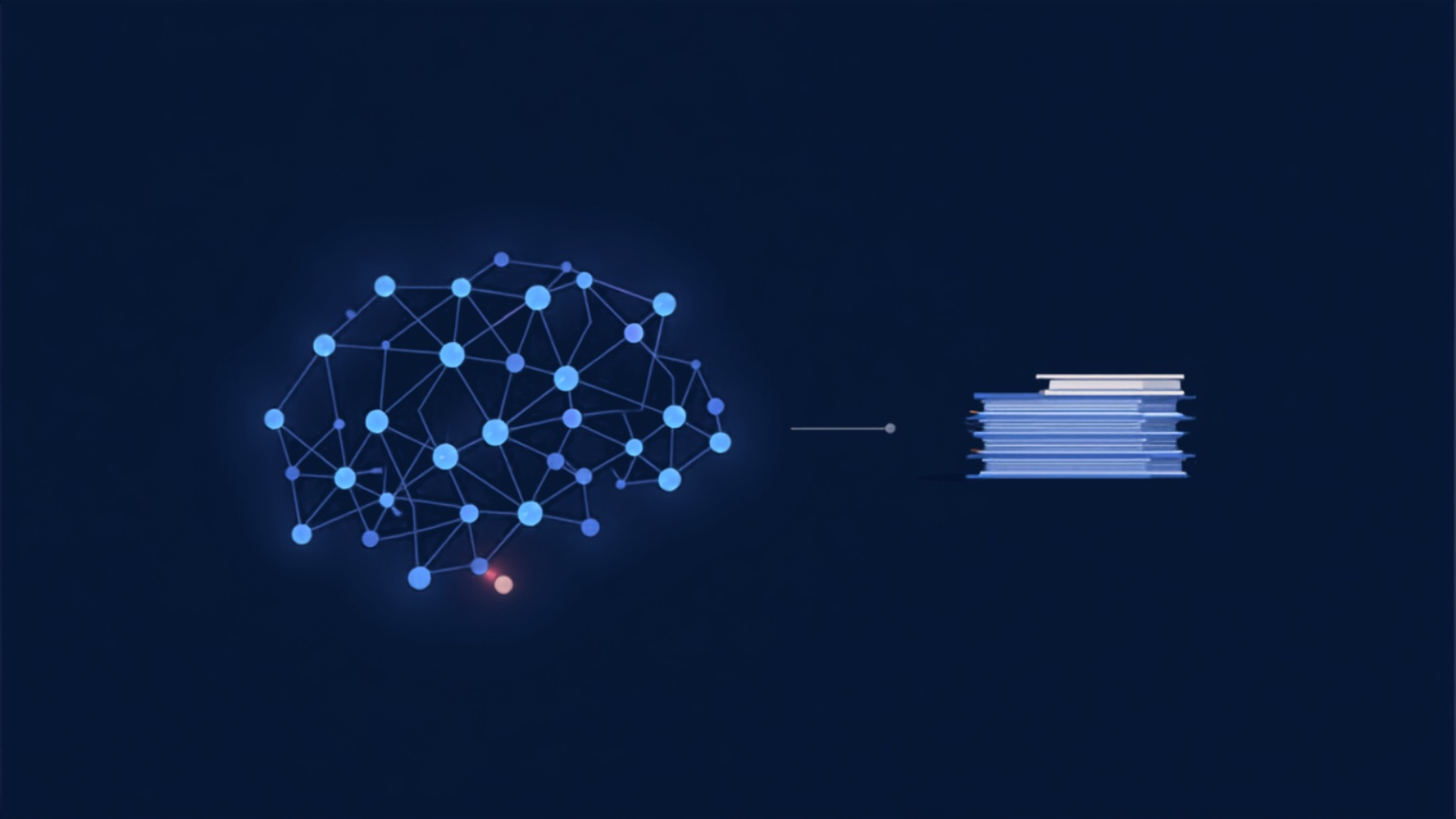
An organizational brain is a structured, searchable memory layer for your business: one place where decisions, client context, procedures, and lessons learned are stored, and which AI agents read from before acting and write to after acting. Instead of company knowledge living in people's heads, chat threads, and scattered docs, it accumulates in a system that gets more useful every week. This is the difference between owning a few automations and owning a company that remembers.
What is an organizational brain?
An organizational brain is a single memory infrastructure that holds what your company knows: which decisions were made and why, what was agreed with each client, how each process runs, and what you learned the hard way. The defining trait is that it's active. AI agents consult it before every task and update it after every task, so it maintains itself as a side effect of normal work.
Four things make it work in practice:
- Structure. Every kind of knowledge has a fixed home: decisions in one place, client context in another, procedures in a third.
- Search. You ask a question in plain language and get an answer from memory, without remembering which file held it.
- Read access. Every agent pulls relevant context before acting, so it operates with full history.
- Write access. Every meeting, email thread, and project feeds the memory back, with nobody assigned to "document things."
Why does company knowledge keep disappearing?
Because the knowledge that matters most is almost never written down. It sits in employees' heads, in Slack threads, in an email chain from last spring, and in a file someone saved to a personal folder. When a person leaves, the business pays for months. When a person simply forgets, the business pays daily and never notices the invoice.
Every manager knows the symptoms. A client gets two contradictory answers from two people. A decision gets re-litigated every quarter because nobody recalls it was settled. A new hire needs a full quarter just to learn "how we do things here." A proposal gets written from scratch even though the team has produced twenty like it.
The root cause is infrastructure. Most companies have no single place knowledge is supposed to flow into, so it scatters.
How is this different from a wiki or knowledge base?
The core difference: a classic knowledge base depends on human discipline, and an organizational brain is maintained by AI agents as part of the work itself. Internal wikis fail at the same point every time. Someone has to remember to update them, nobody does, and within six months the documents are stale and nobody trusts them.
| Aspect | Wiki / tidy shared drive | Organizational brain with AI |
|---|---|---|
| Who updates it | Employees, manually, when there's time | Agents, automatically, after every task |
| What happens over time | Content goes stale, trust erodes | Memory compounds and sharpens |
| How you retrieve | Hunt for the right file | Ask a question, get an answer with context |
| Who uses it | Humans only | Humans and AI agents, before every action |
| Meeting capture | Only if someone wrote a summary | Every meeting lands in memory by default |
How does an organizational brain work day to day?
Day to day, every touchpoint feeds the memory, and every agent consults it before acting. A client meeting ends, and its summary, decisions, and action items are written into that client's record. An email thread wraps up, and the agreements in it are captured. A project closes, and its lessons are filed where the next project will find them.
Then comes the payoff side: recall. Before a client call, an agent assembles a briefing from the entire history: what was agreed, what's still open, what the client asked for three months ago. Before an agent handles a request, it checks what this client has already been told. The context is always available, even when the person who owns the relationship is on vacation.
Why do AI agents without memory plateau?
An agent without memory starts every task from zero, so it never improves. That's why so many companies love their AI agent in month one and quietly stop using it by month three. It writes well, but it doesn't know what was promised to this client last week, doesn't remember that this phrasing was already rejected, and learns nothing from your corrections.
Connect the same agent to organizational memory and the curve changes. Every correction becomes a stored lesson. Every decision becomes context for the next action. The agent you have in month six is working with six months of business context, and you feel that gap on every task. Memory is what turns an agent from a clever tool into a colleague with tenure.
How do you start building company memory with AI?
Start small: pick one knowledge domain, define where its facts live, and connect one agent that reads and writes there. Mapping the entire company's knowledge on day one is the mistake that kills these projects.
The concrete steps:
- Pick one domain with a real pain. For most businesses that's client context: what was agreed, sent, and promised.
- Define the structure. One record per client, holding decisions, meeting summaries, and open items. Simple is good.
- Connect the sources. Meeting summaries, email threads, and relevant files flow into the record automatically.
- Connect one agent that uses it. A meeting-prep agent is a strong first pick: before every call it pulls the history and writes a briefing.
- Expand only after it works. A second domain (procedures, lessons learned, sales knowledge) joins once the first proves its value.
On tooling, we build these layers mostly with n8n for connections and orchestration, Claude for the agents themselves, and Python where custom logic is needed. But tools are the smaller decision. The one that matters is structure: where each fact lives and which agent is responsible for keeping it current.
How long until it pays off?
For a single domain, usually a few weeks. The first time a meeting-prep agent correctly pulls a client's full history, the value is immediate, because prep that took half an hour now takes minutes. The compounding value, the kind you feel when a new hire ramps in days or when no decision ever gets lost, builds over months, because memory needs time to accumulate.
Frequently asked questions
What is an organizational brain in one sentence?
A structured, searchable memory layer for the business that AI agents read from before every action and write to after every action, so company knowledge accumulates in one place instead of scattering across people and tools.
Do we have to replace our current tools?
Usually not. The organizational brain sits as a layer above what you already use: calendar, email, CRM, and project tools keep working, and the memory connects to them and draws from them. The only thing it genuinely replaces is scattered files and manual documentation, which stop being needed.
How is it different from a CRM?
A CRM stores structured records: contact details, deal stage, fields. An organizational brain stores the context around them: why the client hesitated, what was agreed on the call, which framing worked, what was decided and for what reason. They complement each other, and a good agent uses both.
Does this make sense for a small business?
Yes, and in our experience the effect is strongest there. In a small business each person carries an enormous share of the knowledge, so the cost of forgetting or of one person being unavailable is unusually high. Organizational memory gives a small team the continuity of a much larger one.
What about sensitive information?
You define it in the structure from day one: what enters memory, what stays out, and which parts each agent can access. The memory layer lives on infrastructure the business owns, with explicit permissions, rather than in a third-party product that pools your data with everyone else's.
How much maintenance does it need once it's running?
Little, and that's the point. The system is designed so agents update memory as a side effect of doing the work itself. What you do need is a periodic review: confirming the structure still matches how the business operates, and pruning domains that changed.
Can we start with just the documentation, without agents?
You can, but we'd advise against it, because without agents you're back to the wiki problem: manual upkeep that nobody sustains. Agents are what keep the memory alive, on both the writing side and the recall side. One small domain with one working agent beats a grand structure with none.
If you want to see what this looks like on your business, Automation Flow's mapping call is a good place to start: together we map where your knowledge lives today, where it leaks, and which domain is worth building memory around first.